Description
High-Purity Boric Acid
Boric Acid (H₃BO₃), also known as hydrogen borate or orthoboric acid, represents a fundamental boron compound that delivers exceptional performance across industrial manufacturing, agricultural applications, and specialized chemical processes. This white, odorless crystalline powder exhibits remarkable chemical stability, controlled reactivity, and superior purity characteristics that make it indispensable for glass manufacturing, agricultural enhancement, flame retardant production, and pharmaceutical formulations. With guaranteed minimum purity of 99.5%, our premium-grade boric acid ensures reliable, consistent performance for the most demanding industrial and commercial applications.
The unique molecular structure of boric acid provides exceptional versatility and predictable chemical behavior across diverse applications, from high-temperature glass manufacturing processes to precision pharmaceutical formulations. Industrial professionals worldwide depend on its exceptional purity levels and consistent performance for critical manufacturing processes, agricultural treatments, and specialized applications where product reliability directly impacts operational success, regulatory compliance, and end-product quality.
Glass and ceramics manufacturers particularly value boric acid’s effectiveness as a fluxing agent and thermal expansion modifier, where its controlled incorporation into glass matrices enables production of high-quality borosilicate glass, specialty optical components, and durable ceramic products. The compound’s ability to reduce melting temperatures while enhancing mechanical properties makes it essential for manufacturing processes requiring precise thermal control and predictable material characteristics.
Agricultural industries utilize boric acid’s unique nutritional properties as an essential boron micronutrient for enhancing crop yields, improving plant health, and correcting boron deficiency conditions across diverse soil types and growing conditions. The compound’s high solubility and bioavailability ensure efficient nutrient delivery while supporting sustainable agricultural practices that meet modern farming requirements and environmental stewardship goals.
The expanding demand for high-purity chemical reagents and specialized industrial materials continues to drive increased adoption of boric acid across manufacturing facilities, agricultural operations, and research institutions. Our commitment to quality excellence ensures reliable supply of reagent-grade boric acid that meets evolving industry requirements, performance standards, and regulatory specifications for critical commercial applications.
Advanced Industrial Manufacturing and Chemical Processing Applications
Boric acid serves as the cornerstone chemical for sophisticated glass manufacturing processes where controlled thermal properties, chemical resistance, and optical clarity are essential for producing high-performance glass products. Industrial glass manufacturers worldwide utilize boric acid for creating borosilicate glass with superior thermal shock resistance, low thermal expansion coefficients, and exceptional chemical durability for laboratory glassware, pharmaceutical packaging, and specialized optical components.
Ceramics manufacturing facilities depend on boric acid for producing advanced ceramic materials with enhanced mechanical properties, thermal stability, and chemical resistance for aerospace applications, electronic components, and industrial equipment. The compound’s fluxing properties enable lower firing temperatures while improving ceramic density, strength, and dimensional stability essential for manufacturing precision ceramic components meeting stringent performance specifications.
Metal processing industries employ boric acid in specialized applications including metallurgical fluxes, brazing compounds, and surface treatment processes where controlled chemical reactivity and high-temperature stability are required. The compound’s ability to form protective glass-like coatings and facilitate metal joining processes makes it valuable for manufacturing high-quality metal products and advanced metallurgical applications.
Chemical manufacturing facilities utilize boric acid as a fundamental building block for synthesizing borate compounds, flame retardant formulations, and specialty chemicals requiring precise boron content and controlled reactivity. The compound’s predictable chemical behavior and high purity levels ensure consistent manufacturing processes and enable production of specialty chemicals meeting stringent quality standards and performance requirements.
Agricultural Enhancement and Crop Nutrition Systems
Agricultural research facilities and commercial farming operations utilize boric acid’s essential micronutrient properties for developing comprehensive crop nutrition programs that address boron deficiency conditions and optimize plant growth across diverse agricultural systems. The compound’s high solubility and rapid plant uptake characteristics enable efficient foliar applications and soil treatments that deliver measurable improvements in crop yields, fruit quality, and plant health indicators.
Specialty fertilizer manufacturers incorporate boric acid into sophisticated nutrient formulations designed for specific crops, soil conditions, and growing environments where precision nutrition management is essential for maximizing agricultural productivity. The compound’s compatibility with other fertilizer components and stable performance characteristics support development of advanced fertilizer systems meeting modern agricultural requirements and environmental sustainability goals.
Hydroponic and controlled environment agriculture systems depend on boric acid for maintaining optimal boron levels in nutrient solutions where precise control of micronutrient availability is critical for plant health and productivity. The compound’s predictable dissolution characteristics and chemical stability enable accurate nutrient management protocols essential for successful soilless growing operations and commercial greenhouse production.
Organic farming operations employ boric acid as an approved micronutrient supplement that supports sustainable agricultural practices while addressing specific nutritional requirements for organic crop production. The compound’s natural occurrence and minimal environmental impact align with organic farming principles while providing essential nutrition for maintaining soil health and crop productivity.
Flame Retardant Technology and Fire Safety Applications
Fire safety equipment manufacturers utilize boric acid’s exceptional flame retardant properties for developing advanced fire suppression systems, protective coatings, and flame-resistant materials for construction, textiles, and industrial applications. The compound’s ability to form protective char layers and release water vapor during thermal decomposition provides effective fire suppression mechanisms while maintaining low toxicity and environmental safety.
Building materials producers incorporate boric acid into cellulose insulation, wood treatments, and composite materials where fire resistance and long-term stability are essential for meeting building codes and fire safety regulations. The compound’s penetrating properties and chemical stability ensure lasting fire protection while supporting sustainable building practices and environmental responsibility.
Textile manufacturing facilities employ boric acid in specialized flame retardant treatments for fabrics, upholstery, and protective clothing where fire resistance must be balanced with fabric performance, durability, and comfort characteristics. The compound’s compatibility with textile fibers and washing stability make it valuable for producing flame-resistant textiles meeting safety standards and performance requirements.
Polymer and plastics manufacturers utilize boric acid as an effective flame retardant additive for producing fire-resistant plastic products, electronic components, and automotive materials where thermal stability and flame suppression are critical safety requirements. The compound’s synergistic effects with other flame retardants enable development of comprehensive fire safety solutions for diverse industrial applications.
Wood Preservation and Protection Systems
Wood treatment facilities utilize boric acid’s biocidal properties for developing comprehensive wood preservation systems that protect against fungal decay, insect damage, and microbial degradation while maintaining environmental safety and worker protection. The compound’s deep penetration characteristics and long-lasting effectiveness make it essential for treating structural lumber, flooring materials, and specialty wood products requiring extended service life.
Building construction industries employ boric acid-treated wood products for applications where moisture exposure and biological attack are concerns, including foundation elements, subflooring systems, and exterior construction components. The compound’s effectiveness against wood-destroying organisms and compatibility with other building materials support durable construction practices and long-term building performance.
Furniture manufacturing operations incorporate boric acid treatments into wood processing procedures for producing furniture components with enhanced resistance to insect damage and fungal attack while maintaining wood appearance and workability characteristics. The compound’s colorless properties and minimal impact on wood finishing processes enable production of high-quality furniture products with extended service life.
Marine and outdoor applications utilize boric acid wood treatments for protecting marine structures, outdoor furniture, and landscape construction elements exposed to harsh environmental conditions and biological attack. The compound’s resistance to leaching and long-term effectiveness provide reliable protection for wood products in demanding service environments.
Pharmaceutical and Healthcare Applications
Pharmaceutical manufacturing facilities utilize boric acid’s antiseptic and buffering properties for producing ophthalmic solutions, topical medications, and healthcare products where controlled pH and antimicrobial activity are essential for therapeutic effectiveness and patient safety. The compound’s gentle antiseptic action and physiological compatibility make it valuable for developing safe, effective pharmaceutical formulations.
Medical device manufacturers employ boric acid in specialized applications including contact lens solutions, wound care products, and medical equipment sterilization processes where antimicrobial activity and biocompatibility are required. The compound’s proven safety profile and regulatory acceptance support development of medical products meeting healthcare standards and patient safety requirements.
Cosmetics and personal care industries incorporate boric acid into formulations for skin care products, bath preparations, and hygiene products where mild antiseptic properties and pH control enhance product performance and consumer safety. The compound’s gentle action and cosmetic compatibility enable development of effective personal care products meeting consumer expectations and regulatory requirements.
Veterinary applications utilize boric acid for animal health products, antiseptic solutions, and treatment formulations where safe, effective antimicrobial activity is required for animal care and veterinary medicine. The compound’s established safety profile and therapeutic effectiveness support veterinary product development and animal health management.
Product Specifications and Quality Control Standards
Our boric acid consistently meets international quality standards through comprehensive quality control procedures and advanced analytical testing protocols that ensure product reliability, performance consistency, and regulatory compliance. Each production batch undergoes detailed chemical analysis to verify purity levels, moisture content, and trace element composition, providing customers with complete analytical documentation and quality assurance for critical applications.
Product Specifications
| Property | Specification |
|---|---|
| Chemical Name | Boric Acid (Orthoboric Acid) |
| Chemical Formula | H₃BO₃ |
| CAS Number | 10043-35-3 |
| Purity | ≥99.5% |
| Appearance | White crystalline powder |
| Odor | Odorless |
| Solubility | Soluble in water and alcohol |
| Melting Point | 170°C (338°F) |
| pH (1% solution) | ~5.1 |
| Moisture Content | <0.5% |
| Heavy Metals | <10 ppm |
| Chloride Content | <50 ppm |
| Sulfate Content | <100 ppm |
| Iron Content | <5 ppm |
| Particle Size | Fine powder (mesh size available) |
| Bulk Density | 0.8-1.0 g/cm³ |
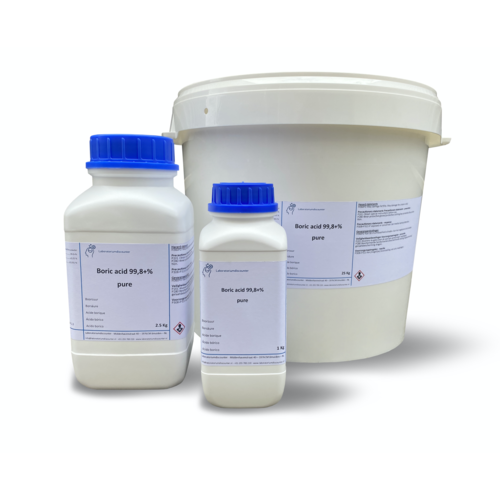
| Packaging Options | 25 kg bags, 50 kg bags, jumbo bags, bulk containers |
| Grade | Industrial/Agricultural/Pharmaceutical Grade |
| Storage Requirements | Cool, dry, well-ventilated areas |
| Shelf Life | 5 years under proper storage conditions |
Safety Protocols and Handling Requirements
Boric acid requires standard chemical handling procedures due to its potential for causing eye and respiratory irritation with prolonged exposure or improper handling. Personnel handling boric acid should utilize appropriate personal protective equipment including dust masks, safety glasses, and protective clothing when working with powder forms to prevent inhalation and eye contact. Adequate ventilation systems should be maintained in areas where boric acid is processed or packaged.
Storage facilities must maintain dry conditions and protection from moisture to prevent caking and maintain product flowability and performance characteristics. Packaging materials should provide adequate moisture barrier properties while enabling easy handling and application procedures. Chemical storage areas require appropriate organization and labeling to ensure proper inventory management and prevent cross-contamination with incompatible materials.
Spill response procedures should address proper cleanup techniques using appropriate collection methods and disposal procedures. Emergency response training should cover exposure treatment protocols, first aid procedures, and environmental protection measures. Regular safety audits ensure continued compliance with occupational safety regulations and institutional safety requirements while maintaining safe working conditions.
Quality Assurance Systems and Manufacturing Excellence
Modern boric acid production employs advanced manufacturing processes incorporating continuous quality monitoring, statistical process control, and comprehensive analytical testing to ensure consistent product quality and performance characteristics. State-of-the-art analytical instrumentation verifies chemical composition, purity levels, and physical properties for each production batch, providing detailed quality documentation and full traceability for regulatory compliance and customer quality assurance programs.
Technical support services provide comprehensive application guidance, process optimization assistance, and troubleshooting support for complex industrial applications across glass manufacturing, agricultural systems, and specialized chemical processes. Collaborative partnerships with customers and research institutions drive innovation in industrial applications, agricultural enhancement, and sustainable manufacturing practices that minimize environmental impact while maintaining superior product quality.
Environmental stewardship programs ensure responsible manufacturing practices and compliance with environmental regulations while maintaining exceptional product quality and performance standards. Sustainable sourcing initiatives, energy efficiency improvements, and waste reduction programs demonstrate commitment to environmental protection and corporate sustainability goals. Regular environmental monitoring and compliance audits ensure continued adherence to regulatory requirements and industry best practices.
Supply chain management systems ensure reliable product availability, consistent quality delivery, and responsive customer service across domestic and international markets. Strategic partnerships with raw material suppliers, transportation providers, and logistics specialists enable efficient distribution networks that support customer requirements and market expansion initiatives while maintaining product integrity and quality standards.